A jelly or pudding that weeps liquid in the cup looks like a defect to every consumer, even when it is safe to eat. For R&D teams, learning how to prevent syneresis is mostly about choosing the right gel network and then not overbuilding it. This guide explains why carrageenan and agar gels release water, and gives seven practical fixes backed by published data, with the Bospres hydrocolloid grades that fit each one.
- Syneresis is a gel shrinking on standing and pushing out liquid; it usually gets worse during storage.
- Kappa carrageenan gels are prone to it; iota carrageenan gels show very little.
- Blending kappa with iota, locust bean gum or konjac is the classic way to prevent syneresis without losing set.
- Firmer is not safer: over-dosed, very firm or brittle gels weep more.
What is syneresis?
IUPAC defines syneresis as the spontaneous shrinking of a gel with exudation of liquid. The FAO agar monograph describes the same thing from a processor’s view: a gel contracts on standing and exudes a liquid. In practice you see free water on top of a cup jelly, whey around a flan, or a wet film under a sliced dessert.
It is a time-dependent defect. In a 2025 study of milk puddings published in Polymers, syneresis increased in every sample during two weeks of refrigerated storage. Three commercial puddings went from 3.00–4.50% syneresis at day 7 to 6.53–8.73% at day 14. A product that looks dry on release day can fail in the retailer’s chiller.
Why carrageenan and agar gels weep
- Network contraction over time. As FAO describes, the gel contracts on standing and squeezes out liquid, so the defect builds during shelf life.
- Gel type. The FAO carrageenan monograph notes that kappa gels are relatively rigid and subject to syneresis, while iota has very little tendency to it.
- Over-firm, brittle gels. The Polymers pudding study linked higher gel strength to increased syneresis, particularly in agar and kappa carrageenan systems.
- Too much gelling agent in dairy. A 2025 review in Gels warns that excessive kappa in milk can promote syneresis and undesirable rigidity.
- Temperature abuse and freezing. Ice crystals damage the network; a 2025 freeze–thaw study reports gels losing water after freeze–thaw cycles.
7 ways to prevent syneresis in jellies and puddings
1. Choose iota where a soft, elastic texture is acceptable
Iota carrageenan forms soft, elastic gels with calcium that FAO describes as virtually free of bleeding. Industry literature such as Prepared Foods describes iota gels as cohesive, elastic, syneresis-free and freeze/thaw stable. In the Polymers milk-pudding study, iota carrageenan and gellan were more effective at preventing syneresis than three commercial puddings. For a deeper comparison of the fractions, read kappa, iota and lambda carrageenan explained.
2. Blend kappa with iota, locust bean gum or konjac
When you need kappa’s clean, firm bite, do not use it alone. Prepared Foods notes that kappa’s high degree of weeping can be controlled by blending with iota carrageenan or locust bean gum. A Japanese study of kappa gels found that adding locust bean gum lessened syneresis and increased rupture strain. The 2025 Gels review reports that a 0.15% kappa + 0.85% iota system gives soft, cohesive gels with minimal syneresis. Konjac glucomannan is a further option: in the freeze–thaw study above, a 0.6% konjac + 1% kappa gel kept 86–90% of its water after freeze–thaw cycles.
3. Target the texture you need, not maximum gel strength
It is tempting to add more gelling agent to “lock in” water. The data say the opposite: in the Polymers study, firmer agar and kappa puddings showed more syneresis, and kappa samples rose from 5.83% at day 7 to 7.17% at day 14. Set a target firmness from your sensory brief, then find the lowest dose that meets it. FAO gives useful reference points: cooked flans and custards typically use kappa or kappa + iota at about 0.20–0.30%, while ice cream needs only 0.010–0.030% to prevent whey separation.
4. Control potassium and calcium levels
Kappa gels need potassium and iota gels need calcium, but more is not better. In the same Japanese study, rupture energy peaked at 0.25% KCl; higher KCl gave lower rupture strain and energy, meaning a firmer but more brittle gel. Since brittle, over-firm networks are the ones that weep, check the ions already supplied by milk, fruit juice or mineral-rich water before adding salts, and dose the remainder to the optimum rather than to excess.
5. Pair carrageenan with starch in dairy desserts
Carrageenan reacts specifically with kappa-casein in milk, so very small doses build a network in dairy. A Cargill dairy dessert whitepaper notes that starch and carrageenan work well together and that syneresis control is a key challenge in hot-filled flans; some recipes use as much as 3% starch with just 0.1% carrageenan. Starch level still needs optimising: in the Polymers study, puddings with 1% modified starch showed less syneresis than those with 5%.
6. Use concentration and sugar to stabilise agar gels
Agar gels can also weep. Research on agarose gels found that syneresis decreased with higher agarose and sugar concentration, and decreased as the gel’s storage modulus increased. FAO adds that Gracilaria agar gains much more gel strength than Gelidium agar above 50% sugar, relevant for high-sugar jellies and yokan. Choosing the right gel strength grade also matters; compare grades in our agar powder GS800 vs GS900 vs GS1000 guide.
7. Respect agar’s hysteresis and avoid freeze–thaw with kappa alone
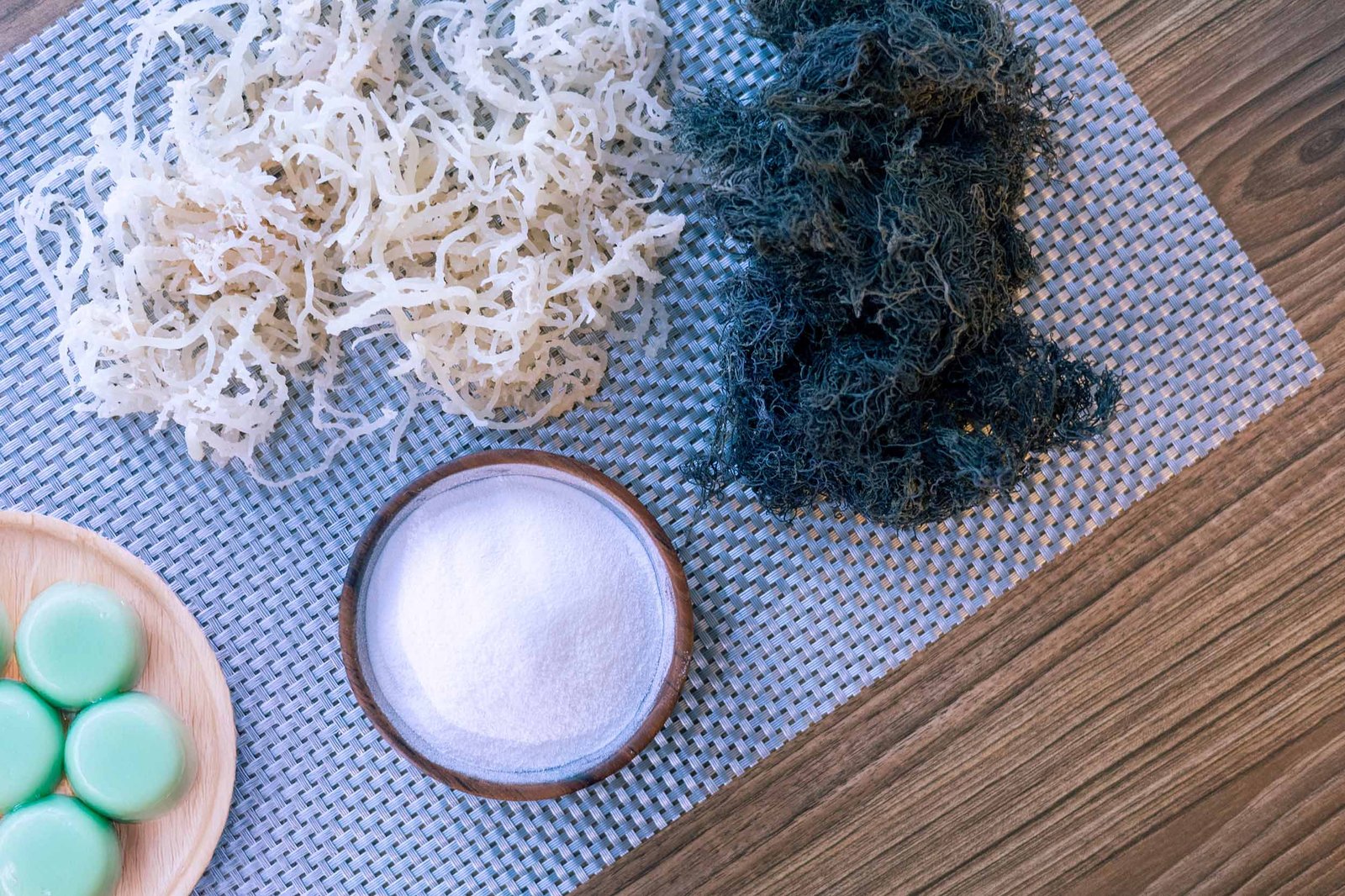
According to FAO, a 1.5% agar solution gels between about 32 °C and 43 °C and does not melt below 85 °C. That wide hysteresis makes agar jellies heat-stable on the shelf, but filling and cooling must be controlled so the gel sets undisturbed. For frozen or freeze–thaw desserts, avoid kappa alone: UL Prospector notes that kappa gels are not freeze-thaw stable, while iota gels are and are less likely to undergo syneresis.
Syneresis control toolbox by product type
| Product | Main syneresis risk | First-choice fix | Reference dose or data point | Bospres grade to trial |
|---|---|---|---|---|
| Water jelly / cup jelly | Rigid kappa network weeps in storage | Kappa + iota or kappa + locust bean gum blend | 0.15% kappa + 0.85% iota gave minimal syneresis (Gels 2025) | RC Kappa with SRC Iota, or a dessert blend |
| Milk pudding / flan | Over-dosed kappa; hot-fill; long chilled storage | Lower kappa, add iota and optimised starch | Kappa or kappa + iota ~0.20–0.30% in flans (FAO) | Dairy blends FM 46, FM 91A, Artagum BA 61 |
| Frozen or freeze–thaw dessert | Ice crystals break kappa gels | Iota carrageenan or kappa + konjac | 0.6% konjac + 1% kappa held 86–90% water after freeze–thaw | SRC Iota |
| Agar jelly / yokan | Low concentration or low solids | Correct agar dose and gel strength; sugar | Agar gels at 32–43 °C, melts above 85 °C (FAO) | Agar Powder GS700–GS1000 |
How to test syneresis in your lab
- Prepare the gel exactly as in production, including hot-fill and cooling profile.
- Store cups at your real chilled (and, if relevant, abuse) temperatures.
- At fixed points, for example day 1, 7 and 14, drain and weigh the free liquid and express it as a percentage of gel weight.
- Run the control and each blend in parallel, and change one variable at a time: hydrocolloid type, dose, salt or starch.
Because syneresis grows with storage time, a day-1 result alone can mislead. The day-7 versus day-14 gap in the Polymers study is a good reminder to test across the full intended shelf life.
Hydrocolloids from Bospres to prevent syneresis
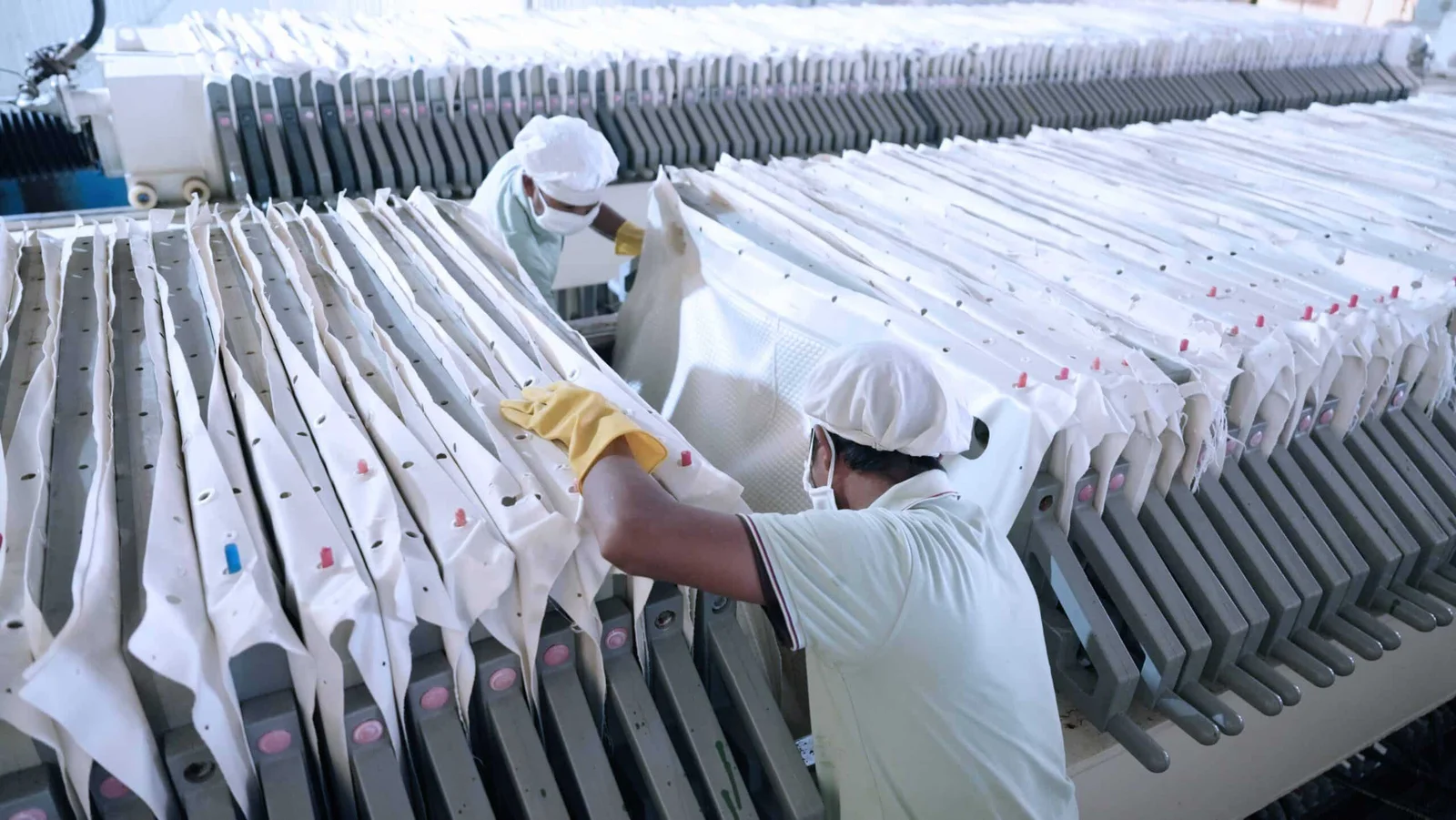
Bospres sources seaweed directly from Indonesia’s prime seaweed-growing regions and supplies the building blocks for every fix above:
- Iota and kappa carrageenan: SRC Iota for elastic, low-syneresis gels and RC Kappa for clear, firm gels. See SRC vs RC carrageenan to choose a grade.
- Agar powder: GS700, GS800, GS900 and GS1000.
- Ready blends for desserts and dairy: Artagum BA 58, Cappiogum BA 45, FM 46 and custom Artagum, Secagum or Cappiogum blends tailored to your gel strength.
- Buyer-friendly terms: 550 kg MOQ, quality documentation on our certificates page, and free evaluation samples for R&D teams.
Weighing a gelatin replacement as well? Our carrageenan vs gelatin guide compares five hydrocolloids side by side.
Fighting weeping jellies or puddings right now? Request a free sample or a technical spec sheet, share your current formula, dose and storage conditions, and our team will suggest a grade or blend to prevent syneresis in your next trial.
Frequently asked questions
What causes syneresis in jelly?
Syneresis happens when a gel network contracts on standing and pushes out liquid. In carrageenan jellies the usual causes are using kappa carrageenan alone, over-dosing the gelling agent or salts so the gel becomes firm and brittle, long chilled storage, and freeze–thaw cycles. Agar jellies can also weep when the agar or sugar concentration is too low.
How do you prevent syneresis with carrageenan?
Use iota carrageenan where a soft, elastic texture fits, or blend kappa with iota, locust bean gum or konjac. Keep the dose and potassium or calcium levels at the minimum that gives your target texture, and in dairy desserts combine carrageenan with an optimised level of starch. Test syneresis over the full shelf life, not just on day one.
Does more carrageenan reduce syneresis?
Not necessarily. Published pudding data show firmer agar and kappa carrageenan gels had more syneresis, and a 2025 review notes that excessive kappa in dairy can promote syneresis and rigidity. Optimise the blend instead of increasing the dose.
Which hydrocolloid is best for freeze–thaw stable desserts?
Iota carrageenan is freeze–thaw stable and less prone to syneresis, while kappa carrageenan alone is not freeze–thaw stable. A 2025 study found that a kappa carrageenan and konjac glucomannan gel kept 86–90% of its water after freeze–thaw cycles.